
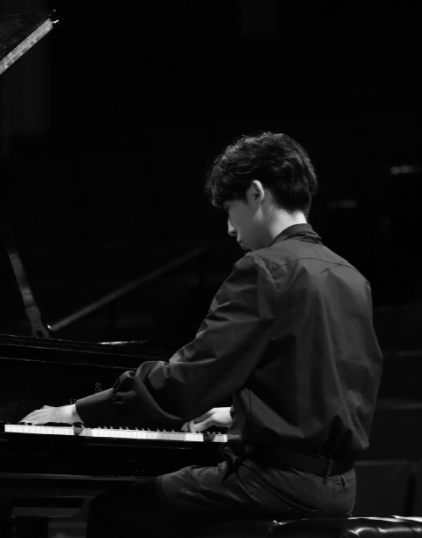
“I often think in music. I live my daydreams in music. I see my life in terms of music.”
– Albert Einstein
Hi! My name is Neil Pan, and I hold a Master’s degree in Piano Performance from the Butler School of Music at the University of Texas at Austin. Over the years, I have had the opportunity to teach piano in a variety of educational settings, and I truly enjoy working with students of all ages and backgrounds. My goal as a piano teacher is not only to help students learn how to play the instrument, but also to use music as a way to develop creativity, communication, confidence, and problem-solving skills. I believe music gives students a meaningful way to express their ideas and emotions while also building discipline, independence, and a lifelong appreciation for music. Outside of teaching, I am an active solo pianist and also perform as a band member with local groups in Austin. I’ve attached my teaching philosophy below to give you a better understanding of my teaching approach, goals, and what I hope to help each student achieve through their musical journey.
As a piano teacher, my teaching goals are to cultivate a love for music and empower students to become independent and confident musicians. My primary goal as a piano instructor is to instill a lifelong appreciation for music in my students. I aim to help students discover their interests and motivations so they can make music for themselves and for others. I strongly encourage my students to develop independent thinking and musical curiosity. When I work with my students, I envision them growing into passionate and expressive musicians, and I hope they will truly enjoy the journey of learningmusic.
I am passionate about supporting students of all ages and believe that it is never too late to develop the skills to play the piano at any stage of life. While I welcome students of different ages and backgrounds, I find that children age 5and older are often better prepared to begin piano lessons with focus, patience, and readiness to learn. As a musician, I have a deep passion for music and love sharing the pieces that inspire me. I encourage my students to approach the piano with dedication, patience, and curiosity. It is never too late to start learning, but a genuine love for the piano is essential for meaningful growth and enjoyment. Enjoy the journey physically Fundamentals I believe that building a strong foundation in piano playing is essential for students to progress and develop a lifelong connection with music. This foundation includes proper sitting posture, relaxed yet supported hand positioning from the shoulders to the fingertips, and mindful technique to prevent tension and injury. Poor posture can lead to serious physical strain, so as a piano instructor, I am committed to guiding my students toward healthy and sustainable playing habits that support both skill development and longevity in their musical journey. Technique can present many challenges when learning the piano. Hand coordination and pedal usage are common technical aspects that require significant time and practice to master. These techniques involve a variety ofstyles and approaches shaped by different musical eras and composers. I demonstrate various methods and practice strategies to help students overcome these technical challenges. At the same time, I want my students to understand that while technique is essential for supporting musical expression, it should not become the sole focus or ultimate goal of piano playing.
Skills
Pianists need to develop a variety of skills beyond the fundamentals, including sight-reading, music theory, ear training, and memorization. In lessons, students will practice note recognition, sight-reading, and learning how to lookahead in the sheet music while playing. They will also explore different musical genres to expand their reading abilities and musical understanding. I incorporate and review music theory concepts in lessons to help students develop the ability to apply this knowledge to the music they play. I also encourage students to actively listen while playing the piano, training their ears to identify notes, chords, melodies, musical structures, and overall sound. Additionally, I emphasize the importance of memorization and pattern recognition in music. I provide students with effective memorization strategies that they can apply throughout their musical journey.
Enjoy the journey mentally
Musicalship and appreciation
Music has the power to convey deep emotions and create beauty that unites people from diverse backgrounds. I engage thoughtfully with my students, encouraging them to focus on essential musical elements such as phrasing, melody, harmony, rhythm, and dynamics. Different touches on the piano produce unique sounds, highlighting the importance of developing musicality and expression. I also encourage students to explore the historical and cultural contexts of different musical styles and genres. Understanding these elements, along with interpreting the composer’s intentions, is crucial for effectively communicating their own musical ideas and expression. I believe that an emotional connection to music is a key element of piano playing. By developing both musicianship and appreciation, students can enrich their overall musical experience. Strong musicianship fosters confident performance and creativity, while musical appreciation deepens their love for music and broadens their understanding of its emotional and cultural impact.
Critical Thinker and Self-development
When faced with challenges, I teach my students to analyze problems and develop solutions by creating structured practice plans and strategies. Lend courage them to become critical thinkers in their musical studies. This may involve experimenting with different techniques, exploring new interpretations, or developing effective practice methods. It is important for musicians to remain open to new ideas and perspectives while appreciating a diverse range of musical genres and styles. This openness enhances their ability to learn from various influences and deepen their understanding of music. I believe that every student can learn valuable lessons through their piano experiences, regardless of whether they pursue a career as a pianist or musician. For example, when encountering challenging music, students can apply specific strategies to overcome obstacles. These approaches can also help them in their personal lives when facing difficulties and solving problems. Reflecting on past experiences allows students to recognize ways to improve in the future and avoid similar challenges both in music and beyond. I strive to create a fun and engaging learning environment that encourages exploration and experimentation with music. I believe that by guiding students toward self-awareness and self-motivation, they can become lifelong learners and pursue their musical passions independently. I encourage students to take ownership of their learning by setting goals, monitoring their progress, and identifying areas for improvement. Providing students with performance opportunities helps build both experience and confidence. I believe music should not be viewed as a competition, but rather as a source of inspiration and connection among musicians.
Coda(Conclusion)
All of my ideas are shaped by my own experiences with piano and music. I continue to grow and improve as a piano teacher by creating a fun and engaging learning environment, adapting my teaching approach to each student’s individual needs, and emphasizing self-awareness and self-motivation. My piano teaching philosophy centers on cultivating a love for music while developing technical proficiency in a healthy and sustainable way. Through this approach, I aim to empower students to become independent and confident musicians and artists. I hope to help them understand that the power of music and art can reflect and enrich many aspects of our lives.